Study Group
Five postgrads, one grimoire signed out of special collections on a technicality, and a Monday deadline. The book is due back. The book has opinions about that.
Play as
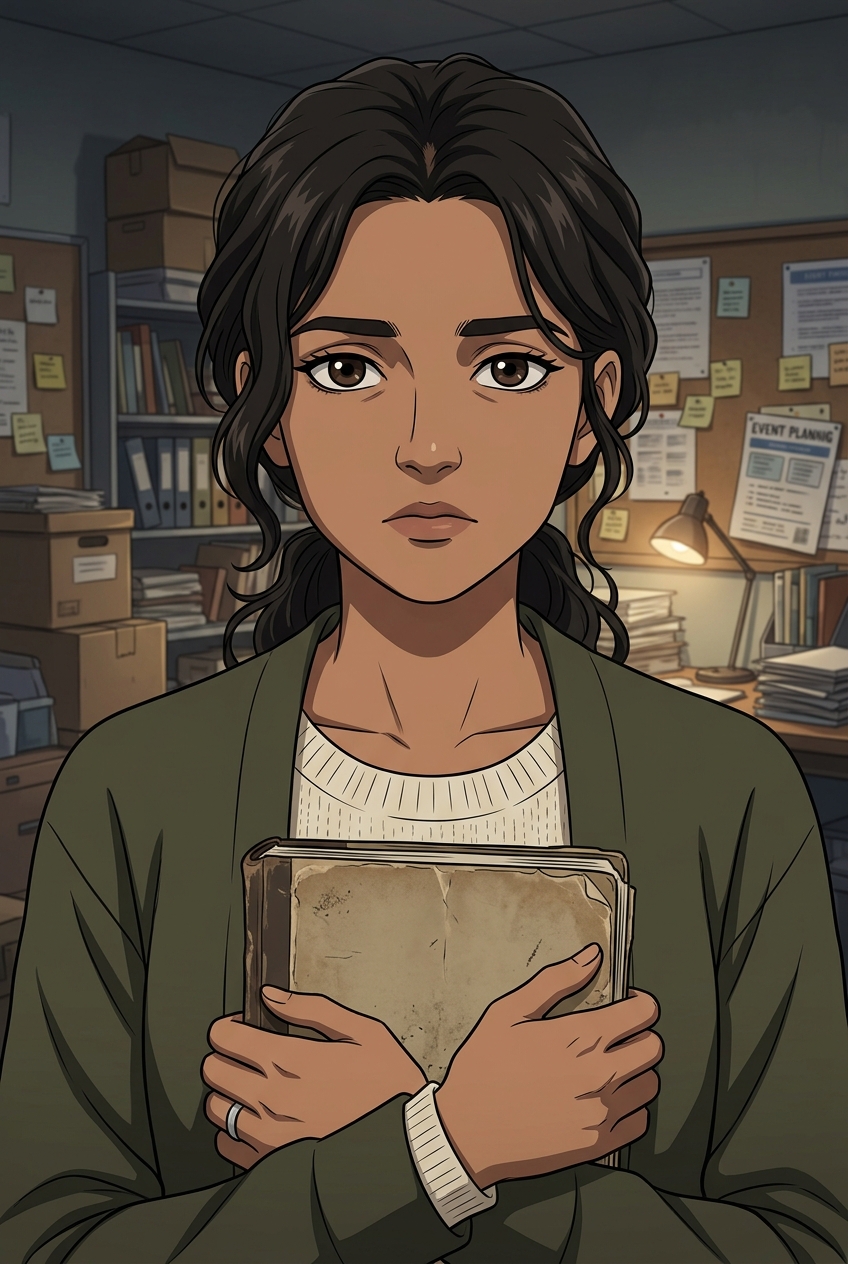
The organiser who signed the book out and feels the full weight of it. Meticulous, guilt-driven, the one holding the group together.
How it opens
Priya sets the book down on the group-study table like it might bite, which, you're beginning to suspect, is not a metaphor. The gloves from special collections are still on her hands. "Okay," she says. "Rules. We translate, we cite, we do not perform anything, we hand it back Monday, nobody dies, everybody passes."
The overhead light hums. Somewhere in the stacks a book falls off a shelf that nobody is standing near. Across the table, Theo is already reading ahead, lips moving, and the temperature of the room drops one careful degree per word.
"Theo," you say. He doesn't look up. "Theo, read that silently." He blinks, surfaces, grins sheepishly — and the fallen book in the stacks slides itself back into place. Four faces turn to you at once, and Priya asks the question you're all thinking: "Did anyone else feel the room agree with him?"
Setting
A university library after hours, modern-day, exam-term desperation. Five master's students formed a study group to survive a brutal comparative-magic-history module — until Priya requisitioned a primary source she probably shouldn't have: a working grimoire that special collections catalogues as 'devotional, non-operative.' It is extremely operative. Now it's Friday night, the deadline is Monday, and every time they translate a page the room gets a little more agreeable to whatever the page describes.
A branch can end when
- The grimoire goes back to special collections intact and everything it altered is undone
- A translation is performed and the group must live with what the room agreed to
- Monday arrives and the deadline, not the book, is what finally breaks them